Aconite Flowering Plant Lineart Embroidery Design Review
As an embroidery designer preparing for a weekend craft fair, every design file gets a critical eye. It's not just about aesthetics; it's about sales potential, production ease, and booth impact. Today, I'm reviewing the Aconite Flowering Plant Lineart embroidery file. This design belongs to the Forest category, and my task is to envision it on actual products that will sit on my table alongside embroidered tote bags, aprons, tea towels, and caps.
First Impression: Elegant, Minimal, and Surprisingly Bold
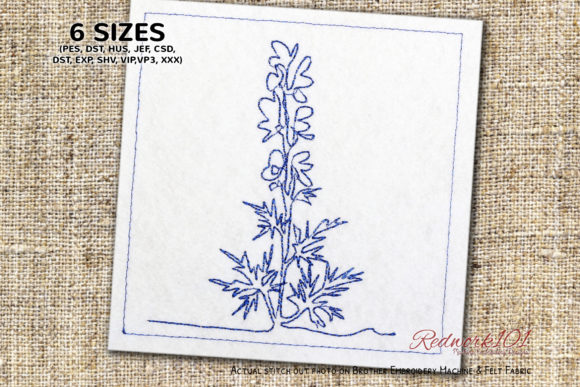
The title Aconite Flowering Plant Lineart immediately signals a botanical, linear style. This isn't a dense, filled floral illustration. It’s lineart. That suggests a modern, elegant, and minimal aesthetic. It feels premium and decorative, leaning towards a sophisticated rustic or modern farmhouse vibe rather than cute or festive. The optional box stitch mentioned in the description is a practical note—the outer box color is typically separate. This tells me the core design is clean, focusing on the plant itself. That simplicity is a powerful selling point at a craft fair, where clarity from a few feet away matters.
Product Performance: Where This Design Will Shine
Let's walk through my typical craft fair inventory and evaluate where the Aconite Flowering Plant Lineart will stand out.
Tote Bags and Market Bags
This is a strong candidate. The linear, open design won’t become a dense, heavy stitch area that might weigh down lighter bag fabrics. It will look intentional and artful on a natural canvas or linen tote. Because it’s lineart, it can be scaled to a larger focal point without consuming excessive thread or time, making batch production for several bags more feasible. The elegance elevates a simple bag into a handmade product with designer appeal.
Aprons and Kitchen Towels
For aprons, placement is key. This design could work beautifully as a chest or pocket accent. On tea towels, especially textured linen, the lineart style will retain clarity. Dense stitch areas can get lost on towel textures, but clean lines should pop. It offers a quieter, decorative alternative to bold slogan embroidery, appealing to customers looking for subtle kitchen aesthetics.
Embroidered Patches and Caps
Patches are a consideration. The success here depends entirely on the final stitch density and size. If the design has tiny details or very fine lines, reducing it for a small patch might cause clarity loss. It's crucial to test on scrap fabric first. For curved surfaces like caps, a simpler, open design like this can often adapt better than extremely detailed fills, provided the stabilizer is correct.
Pillow Covers and Giftable Pouches
On pillow covers, this becomes a sophisticated decorative element. It feels repeatable—you could embroider a single corner or create a series with different botanicals for a cohesive collection. For small fabric pouches or giftable items, it serves as a perfect accent, adding value without overwhelming the small product. This versatility is great for small shop products and building brand consistency across items.
Practical Production & Selling Points
Moving from potential to practical reality involves several checks.
Visual Clarity and Scale
The Aconite Flowering Plant Lineart, by its nature, should be easy to understand at a glance. Customers at a busy fair will instantly recognize a floral motif. It works as both a small accent and, likely, a scaled-up focal design. This scalability aids in creating a dynamic booth display with items of varying sizes.
Photography for Online Listings
For my Etsy seller side, clean lineart typically photographs well. It creates sharp contrast, especially on neutral fabrics. It's advisable to create at least one real mockup—on a tea towel or tote—for photos rather than relying solely on printable mockups. Real thread and fabric texture sell the handmade quality.
Batch Production Considerations
Is this design repeatable for producing ten, twenty, or thirty tea towels? The likely lower stitch density of lineart, compared to filled designs, suggests faster machine embroidery times and less thread consumption. That's a practical advantage for craft fair product batch preparation. Always test the design on scrap fabric to confirm actual stitch density and time.
Careful-Use Notes for the Embroidery Designer
Every design has its specific requirements. Based on the description provided, here are my direct notes for using this digital embroidery file.
- Check Thread Contrast: Lineart relies on contrast. Test on both light and dark fabric to ensure the chosen thread color pops. The optional box stitch means you have a layout element to consider or omit.
- Review Spacing and Hoop Size: Confirm the design's dimensions fit your intended hoop size for each product. Scaling down for a cap may require checking that fine lines don't merge.
- Inspect Stitch Density: Even lineart can have dense areas if lines are thick or complex. Run a test to ensure it's suitable for thinner fabrics like tea towels without excessive puckering.
- Use the Right Stabilizer: This is non-negotiable. For textured towels or curved caps, choose a stabilizer that supports clean line execution.
- Compare Fabric Colors: The elegant mood of this design pairs best with natural, rustic, or solid-colored fabrics. Create a small palette of fabric samples to compare.
- Confirm Commercial Licensing: The product description does not specify license terms. Before selling any finished product, it is essential to verify that the embroidery file comes with a license for commercial embroidery and physical product sales.
Final Booth Strategy & Customer Engagement
In my booth, the Aconite Flowering Plant Lineart will contribute to a cohesive, nature-inspired section. Its elegant minimalism attracts customers looking for timeless, non-trendy designs. It increases perceived product value by showcasing skilled, intentional embroidery rather than mass-market imagery. To maximize engagement, I would display it on a high-contrast product—like a dark linen pillow cover with a bright thread—placed at eye level. Pairing it with other forest-themed items creates a storytelling vignette that draws buyers in.
The true test is always in production and reaction. This machine embroidery design has strong potential for craft fair success, provided the practical checks are done. Its mood is its greatest asset: elegant, botanical, and clear. For the embroidery business owner focusing on handmade market products, it’s a design worth hooping, testing, and confidently adding to your next fair inventory.