A Classic Car Design for Machine Embroidery Projects
When an embroidery design lands in my library, my first question isn’t just “is it pretty?” It’s “how will this look in thread, on fabric, and in the hands of a customer?” Today, I’m looking at the Classic Muscle Car embroidery file. This isn’t a generic review; it’s a practical judgment from a designer’s perspective, thinking through real projects, from client orders to my own handmade shop items.
The Immediate Mood and Where It Belongs
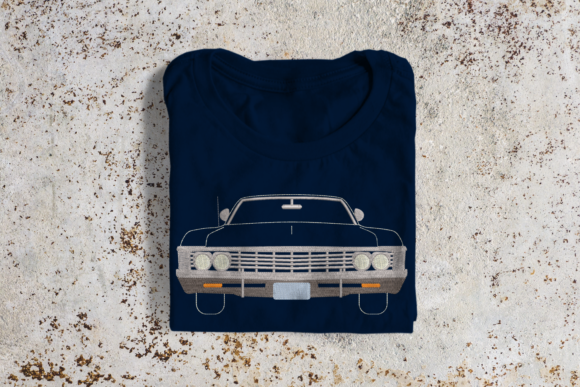
The moment you open this design, the mood is clear: nostalgic, bold, and distinctly American. The shape is instantly recognizable—a powerful, clean silhouette of a classic muscle car. There’s a strong, confident personality here without overly fussy details. This isn’t a hyper-realistic technical drawing; it’s a stylized emblem that celebrates the theme. That visual personality tells me it belongs on products that have a certain character. Think a custom embroidered tote bag for a car show enthusiast, a bold patch on a denim jacket, or the centerpiece on a pillow cover in a garage-themed man cave. It feels inherently giftable, especially for a classic car enthusiast.
Performance in Real-Life Embroidery Situations
Let’s walk through some scenarios. I’m picturing stitching this onto a heavyweight cotton sweatshirt. The solid shape and likely use of fill stitches for the body should create a satisfying, dense area that stands up well on knit fabric. On a tote bag, it becomes a statement piece—the kind of design that makes a handmade product feel purposefully crafted, not just decorated. For a small business owner selling at craft fairs, this design on a high-quality apron or a set of kitchen towels could tap into a specific, passionate audience.
For baby clothes or nursery decor? Probably not, unless it’s a very specific gift for a dad who’s a collector. But for personalized gifts like a cap for a grandfather or a wedding gift for a couple who loves restoring old cars, it hits the mark perfectly. In commercial embroidery, say for a local auto club’s merchandise, it offers that recognizable, club-branded look without being a complex logo. Its simplicity is its strength for embroidered patches and apparel decoration.
A Natural Fit for Digital Product Sellers
If you’re a digital product seller, this design’s clean lines make it excellent for printable mockups. You can easily showcase it on a digital preview of a sweatshirt or tote bag. The fact that the car’s color comes from the background fabric—as noted in the description—is a huge plus for mockups and customer imagination. They can visualize it on light or dark fabrics instantly. This flexibility boosts its value as a design asset in your shop.
Where This Design Needs Careful Consideration
Now, for the practical notes. Any design with a solid, large fill area like a car body requires attention to stitch density and stabilizer. On thin or stretchy fabric like a t-shirt, you’ll need the right stabilizer to prevent puckering. On textured fabrics like some blankets, the clarity of the outline might soften, which could be a charming effect or a detail loss, depending on your goal.
The smaller hoop sizes mentioned could be challenging. If the design is scaled down significantly, those clean lines might become very dense in a small area. Embroidering on a curved surface like a cap requires testing—the design’s proportions might need adjustment to look balanced on the front panel. For products that need frequent washing, like baby items (though not the ideal use here) or work aprons, a dense fill stitch area holds up well, but always recommend a test wash on scrap fabric.
Also, a key point from the description: “Whatever background fabric you sew her onto will also be the the color of the car.” This is clever but requires thought. On dark fabric, the car will be dark. The design relies entirely on its outline and interior details (like perhaps grille lines) to define it. On very dark fabrics, you might lose some visual punch. Always test the design on scrap fabric first, especially checking thread color contrast for the outline and details against your chosen background material.
Impact on Product Value and Customer Perception
From a business and craft perspective, using a design like Classic Muscle Car well-executed adds significant value. It shows you understand a niche audience. For an Etsy seller, a beautifully embroidered pillow with this design tells a story, making the product feel specialized and thoughtful, which builds customer trust. It enhances handmade presentation by being a clear, professional embroidery file stitched with care.
As a gift, it has high recognition and appeal. It’s not vague; it’s a specific statement that feels personal. For brand consistency in a small shop focused on automotive or Americana themes, it’s a perfect fit. It engages buyers because it taps into a passion, not just a generic aesthetic.
Essential Designer Notes Before You Stitch
Before you load this file and start a project, here’s my checklist:
- Run a test on scrap fabric of the same weight and texture as your final product. This reveals how the fabric texture interacts with the stitches.
- Check the provided hoop sizes and confirm your machine’s compatibility. Don’t assume.
- Inspect the small details in the file preview. Are there tiny lines or areas that might become too dense or lost?
- Test it in black and white mockups to see how it reads purely as shape, which helps gauge its strength on any color fabric.
- Compare how it would look on light versus dark fabric backgrounds. You might choose a lighter thread for outlines on dark fabric to boost clarity.
- Use proper stabilizer. For a design like this, I’d often recommend a cutaway for permanent items like patches or tote bags, especially if the fill area is large.
- Crucially, confirm the licensing terms before selling finished items or using it in commercial projects. The description notes 8 formats, which suggests versatility, but the license for commercial use must be clear.
This Classic Muscle Car embroidery design has the potential to be a standout element in your work. Its success hinges not on the file itself, but on how you, as the embroiderer or designer, apply it thoughtfully to the right project with the right preparation. It’s a solid, thematic asset for hobbyists creating personalized gifts and for creative entrepreneurs building a product line with a distinct personality. Stitch it with confidence, but always stitch it with preparation.